 blog
How to Choose a Stylish Eco-Friendly Water Bottle in 2026
Quick Summary
A stylish eco-friendly water bottle is one you keep using for years, so durability, repairability, and design matter as much as materials. Judge the bottle on what it is made from, whether it will last, and whether you will actually carry it every day.
- Ask the seller what the body and interior lining are made of before trusting an eco claim.
- Divide the total cost by realistic years of use, including replacement gaskets, to compare true yearly cost.
- Check whether the cap, gasket, and straw are sold separately and can be replaced.
- Stainless steel and glass suit long daily use, while recycled plastic needs third-party certification to verify its claims.
- Test the lid seal over a sink before travel, and confirm airline rules for liquids in checked bags.
Table of Contents
- What Makes a Water Bottle Both Stylish and Eco-Friendly in 2026
- Materials Compared: Stainless Steel, Glass, Copper, and Recycled Plastic
- Plastic-Free Water Bottles: What the Label Actually Means
- Insulation, Capacity, and Durability: Matching the Bottle to Your Day
- Best Eco-Friendly Water Bottles 2026: Side-by-Side Comparison
- Best Water Bottle for Travel: Portability and Leak Resistance
- Cost Per Year, Care, and Repairability: Choosing Your Bottle
- Frequently Asked Questions
What Makes a Water Bottle Both Stylish and Eco-Friendly in 2026
Last Updated: November 10, 2026
Choosing a stylish eco-friendly water bottle in 2026 means balancing three things: how it looks, how it performs, and what it does to the planet. Handcrafted copper bottles wrapped in premium leather raise this question as well. Most buyers judge a bottle on looks first and sustainability second, which is understandable. The trouble is that a beautiful bottle that leaks, flakes, or ends up in a landfill after a year is not a good purchase.
A truly eco-friendly bottle is one you keep using. The most sustainable container is the one that replaces hundreds of disposable bottles over its lifetime. That means durability, repairability, and a design you actually want to carry matter as much as the material list.
Three questions help separate a good bottle from a marketing exercise:
- What is it made from, and how was it sourced? Materials and manufacturing shape the footprint more than any slogan.
- Will it last? A bottle used daily for five years beats one replaced every season.
- Can you live with it? Weight, capacity, and cleaning routine decide whether the bottle stays in your bag.
Watch out: A bottle labeled "eco" with no disclosed materials, coating details, or warranty deserves skepticism. Ask the seller directly what the body and lining are made of.
Materials Compared: Stainless Steel, Glass, Copper, and Recycled Plastic
Material choice sets the baseline for a bottle's environmental footprint, but the useful comparison goes beyond which material sounds greener. Four factors matter for each option: how the raw material is sourced, how much energy goes into making the finished bottle, how long it stays in use, and what happens to it at end of life.
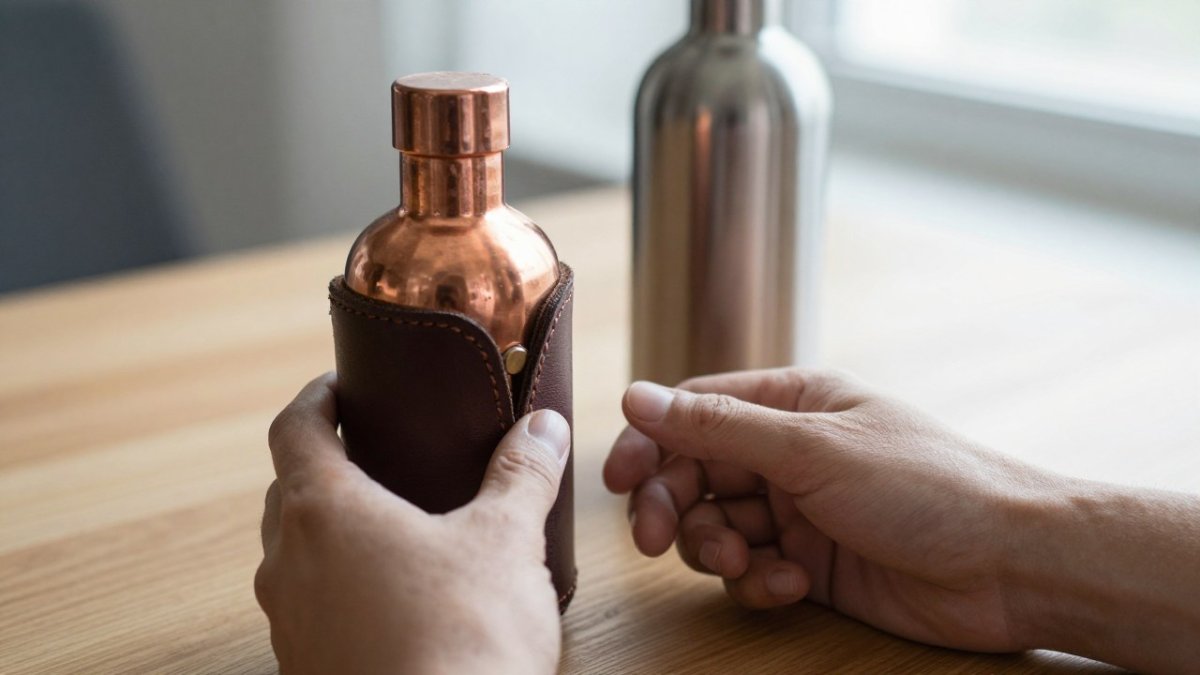
Stainless steel is the most widely used body material for insulated bottles. Most grades are highly recyclable, and scrap steel is routinely melted down, which means a bottle retired after many years still has residual value as a material. Its main environmental cost is the energy needed to produce steel and to create the vacuum-insulated double wall. That upfront footprint is offset only if the bottle is used for years rather than months. Look for disclosed steel grade (commonly 18/8 or 304 food-grade stainless) and a description of the insulation method, since a bottle that cannot tell you its grade is harder to verify.
Glass has a low material footprint and is fully recyclable, but it is heavy to ship and fragile in use, and a broken glass bottle has a short second life. Its environmental case rests on durability in the user's hands. Borosilicate glass resists thermal shock better than standard soda-lime glass, which matters for hot liquids. Glass pairs well with a protective sleeve, and the sleeve material is worth checking, since a silicone or fabric sleeve may limit recyclability.
The critical detail is the interior lining. Copper bottles are typically coated on the inside to keep the metal from contacting the water. Ask whether the lining is described as a food-grade coating, whether the manufacturer names its composition, and whether it has been independently tested. A lining that is vague or undocumented is a reason to pause.
Recycled plastic is the option where verification matters most. A claim of post-consumer recycled content should point to a third-party certification, such as the Global Recycled Standard, which tracks recycled content through the supply chain. Without that, "made from recycled materials" can mean anything from post-industrial scrap to a small fraction of recycled resin. Plastic bottles also tend to degrade through repeated washing, scratching, and heat, so their environmental benefit depends almost entirely on how long they stay in use.
For a practical decision, match the material to your use pattern. A bottle carried daily for years justifies the upfront footprint of steel or copper. A bottle used occasionally and replaced often is better served by an option with a lower initial impact, provided you accept the shorter lifespan.
Watch out: "Recyclable" describes a material's capability, not whether your local system will accept it. Check your local recycling rules before assuming a mixed-material bottle, such as one with a plastic cap and steel body, can be processed.
The table below sums up how each material compares on the factors that shape its footprint.
| Material | Key strength | Main caution |
|---|---|---|
| Stainless steel | Highly recyclable; scrap retains value | Energy-heavy production; verify grade (18/8 or 304) |
| Glass | Low material footprint; fully recyclable | Fragile; heavy to ship |
| Copper | Durable finish when lining is documented | Check interior lining is food-grade and tested |
| Recycled plastic | Lower upfront impact | Verify recycled content with Global Recycled Standard |
Plastic-Free Water Bottles: What the Label Actually Means
"Plastic-free" sounds simple, but labels vary. Some bottles are free of plastic in the body but use plastic in the cap, gasket, or straw. A bottle marketed as plastic-free should list every component that touches your water and state its material.
Many people searching for plastic-free options also want non-toxic materials. The surest way to evaluate that claim is to read the material disclosure and check whether the product references a recognized testing or certification standard. Vague phrases like "pure" or "natural" do not describe a material.
Watch out: Silicone gaskets and plastic straws are the most common hidden plastic components. Check them before assuming a bottle is fully plastic-free.
Insulation, Capacity, and Durability: Matching the Bottle to Your Day
Insulation depends on construction. Double-wall vacuum insulation keeps drinks cold for many hours and reduces condensation on the outside. Single-wall bottles do not insulate and suit cold or room-temperature water only.
Capacity should match your routine. A 16 to 20 ounce bottle fits a short commute, while 32 ounces or more suits long workdays, hiking, or gym sessions. A larger bottle holds more water but adds weight, so consider how much you will carry.
Durability comes down to the wall thickness, the finish, and how the cap seals. Stainless steel and copper resist dents well. Check whether the cap and gasket can be replaced, which extends the bottle's life considerably.
Best Eco-Friendly Water Bottles 2026: Side-by-Side Comparison
We are not going to pretend that one bottle suits everyone. The right choice depends on how you use it. Below is how KYLA compares with the typical options a buyer will consider.
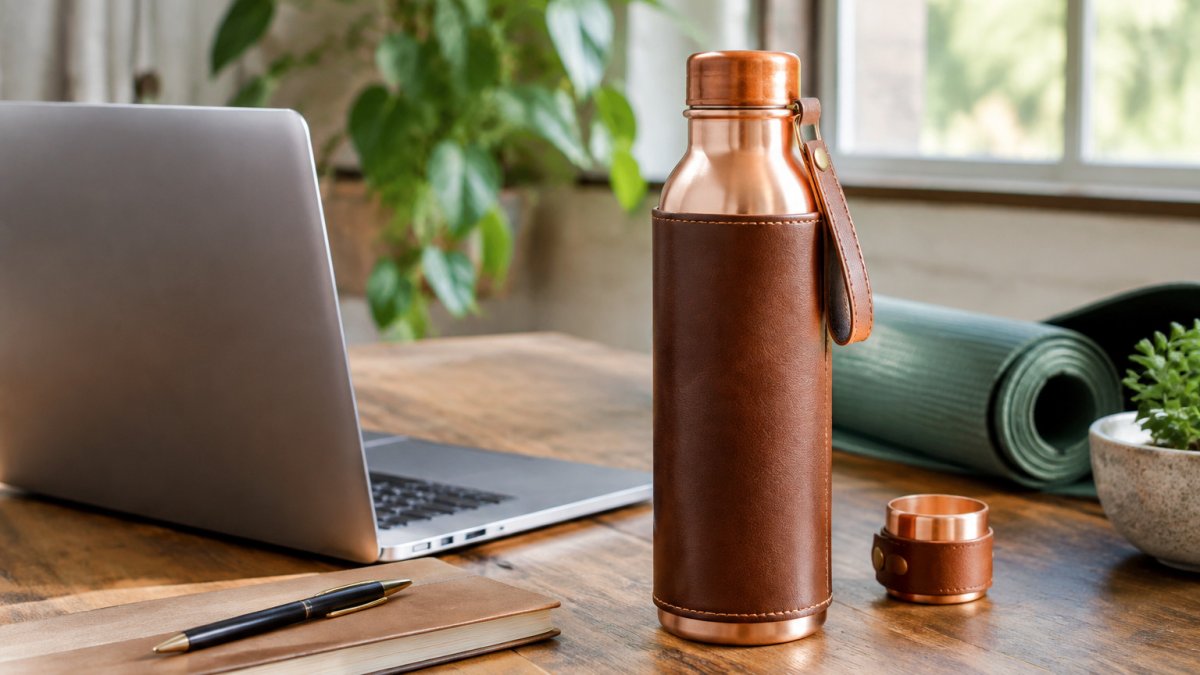
KYLA is our own handcrafted copper bottle wrapped in premium leather. It is built for people who want a bottle that doubles as a daily object, with a design that looks at home on a desk or in a yoga bag. Our top pick for design-focused buyers, it is best for the person who values materials and finish. You can browse the full range on our PRODUCTS page.
Pricing depends on the model, so check the KYLA website for current prices or a quote.
Best for: Buyers who want a stylish, handcrafted bottle that doubles as a daily design object.
Skip if: You need the most rugged, insulated bottle for rough outdoor use.
Best Water Bottle for Travel: Portability and Leak Resistance
Travel puts a bottle under stress: it gets tossed into bags, carried through airports, and left upright on tables. For travel, prioritize a secure lid with a gasket that seals properly, a body that fits standard cup holders and bag side pockets, and a weight you will not resent after a long day.
Leak resistance depends on the cap design and gasket quality, so test the seal before a trip by filling the bottle and turning it upside down over a sink. Insulation also helps on flights, where cold water stays cold for hours.
Watch out: Do not pack a bottle with carbonated drinks or hot liquids in checked luggage without confirming the rules with your airline and the Transportation Security Administration. Empty bottles pass through security checkpoints.
Cost Per Year, Care, and Repairability: Choosing Your Bottle
The sticker price is the least useful number on a bottle's listing. A better measure is cost per year of use: the purchase price, plus any replacement parts, divided by the number of years you actually keep the bottle in service. Here is how that works in practice. Suppose one bottle costs $45 and lasts four years with a replacement gasket at $8 in year three, while a $20 bottle with a sealed lid lasts one year before the cap stops sealing. The first works out to roughly $13 per year ($53 divided by four), and the second to $20 per year, before you count the cost of buying a new bottle each season. The cheaper bottle is the more expensive one to own.
To run the same comparison on any product, collect three numbers before you buy: the price, the price of the consumable parts most likely to fail (usually the gasket and cap), and the manufacturer's stated warranty period. Divide the total by a realistic lifespan rather than a hopeful one. If a seller does not publish replacement part prices or warranty terms, treat that absence as a sign the bottle may not be designed to be repaired.
Repairability is where bottles differ most. Ask four questions before purchase. Are the cap, gasket, and straw sold as separate components? Are they listed in the brand's current catalog, or only in the original packaging? Does the cap thread use a standard or proprietary size? And does the body's finish, such as a leather wrap or powder coat, have a documented refinishing or replacement option? A bottle that scores well on all four can stay in circulation for many years, which does more for its environmental footprint than any single material choice.
Care routines affect lifespan as much as design does. Keep the bottle dry and away from heaters and hot car interiors, and follow the care guidance provided with your bottle.
Watch out: Leather and copper finishes can be damaged by harsh cleaners, abrasive scrubbers, and citrus-based solutions left in contact for long periods, so use gentle methods and rinse thoroughly. Our Cleaning & Care Instructions page walks through the steps for keeping your bottle in good condition.
Frequently Asked Questions
What is the best eco-friendly water bottle in 2026?
The best choice depends on how you use it. Stainless steel offers durability and insulation for daily commuting, glass suits people who prioritize taste and easy cleaning, and copper appeals to buyers who want a distinctive look and a traditional-style vessel. For a stylish eco-friendly water bottle, look for a reusable design with a replaceable lid, a clear capacity in ounces, and transparent material information. KYLA offers handcrafted copper bottles wrapped in premium leather. Check the KYLA website for current prices or a quote.
Are copper water bottles safe for everyday use?
Copper bottles are used widely for drinking water. Look for a bottle that states its copper content plainly and explains how its interior is finished. If you have a health condition or questions about copper intake, check with a doctor before making it a daily habit.
Are reusable water bottles better for the environment than disposable bottles?
A reusable bottle replaces many single-use plastic bottles over its life, which reduces waste and the resources used to produce them. The environmental benefit grows with use, so a bottle you carry every day for years generally has a lower impact than frequent purchases of bottled water. The real gains come from using the bottle consistently, keeping it long enough to justify its production footprint, and avoiding single-use plastic whenever you can.
How do you clean a copper water bottle?
Follow the care guidance provided with your bottle, and keep the leather exterior dry and away from prolonged moisture.
